


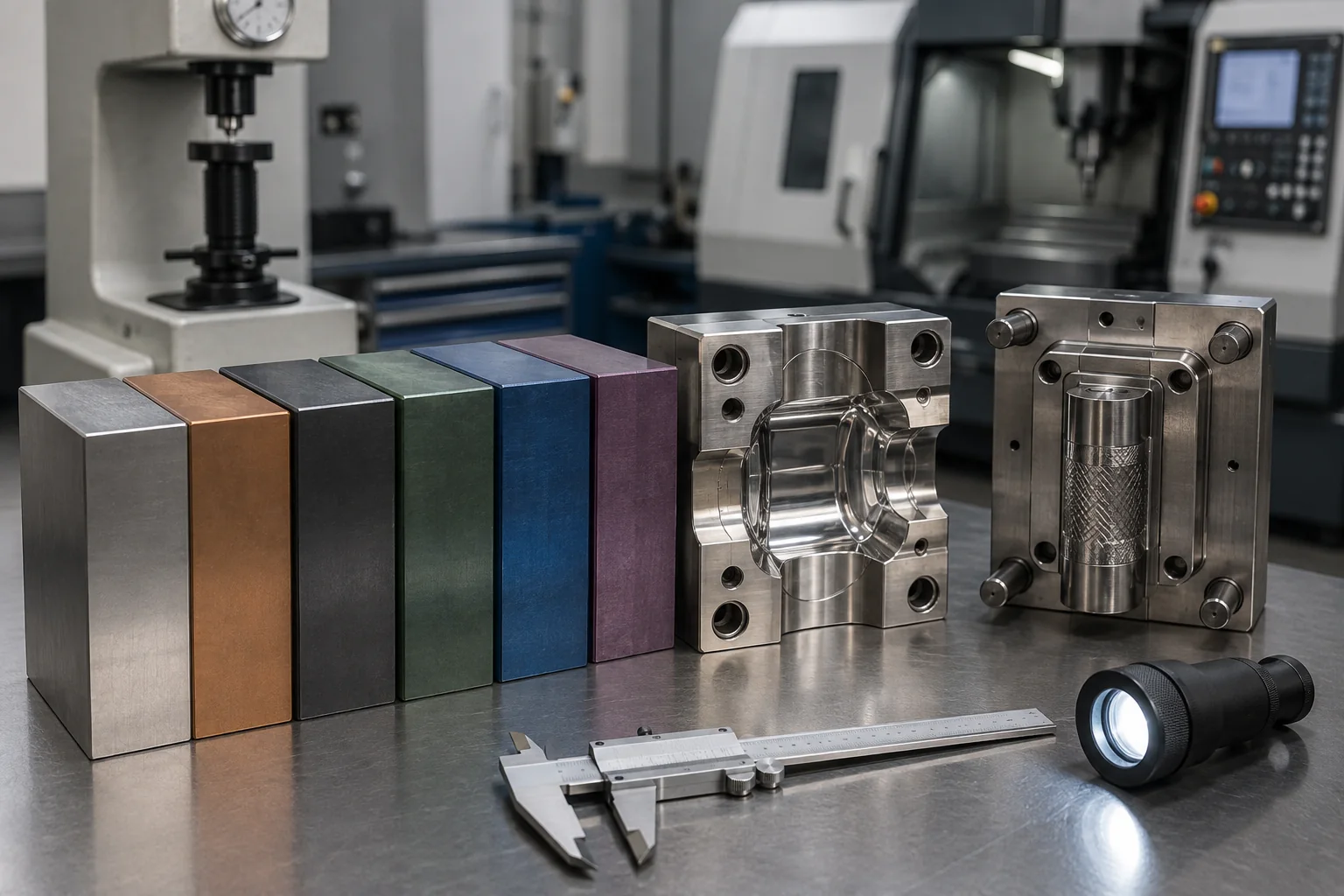
1. Define the service conditions
Confirm resin, glass or flame-retardant additives, annual volume, surface requirement, tolerance, cooling water and storage environment. These factors determine corrosion, wear and polish demands.
2. Match steel families to the task
Pre-hardened P20-type steels suit many medium-volume bases and cavities. H13-type hot-work steels support demanding inserts; S136-type stainless steels help with corrosion and high polish. Exact grades vary by supplier and standard.
3. Specify heat treatment and hardness
Write the required delivered condition, heat-treatment route, working hardness and nitriding or coating limits. Poor treatment can distort inserts or reduce toughness despite a correct grade.
4. Verify material and plan maintenance
Require mill certificates, positive material identification where needed and hardness records. Use replaceable inserts in wear areas and define cleaning, lubrication, water quality and spare components.
Select steel by total tooling risk
The best specification may use different steels for the base, cavity, core, slides and wear inserts. A documented component-by-component choice balances initial cost with quality, uptime and repair over the intended life.