


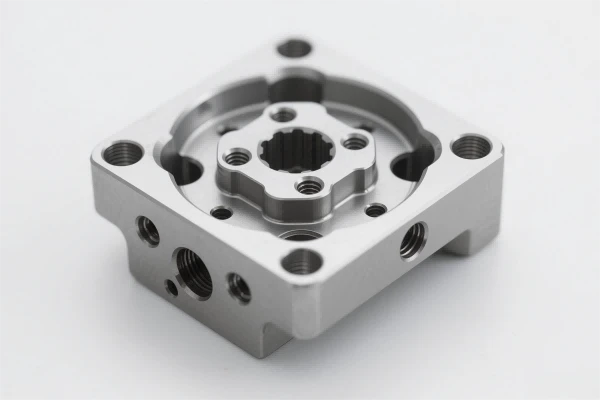
CNC Milling Technology Overview
CNC milling represents a sophisticated manufacturing methodology that employs computer-controlled machinery to precisely sculpt and form various materials including metallic alloys, polymer compounds, and composite substances. CNC milling technology delivers exceptional dimensional accuracy and repeatability in creating intricate geometries, serving critical applications across aerospace engineering, automotive manufacturing, medical device production, and consumer product development sectors. Modern CNC milling operations have transformed traditional manufacturing processes through advanced automation and precision control systems.
CNC Milling Process Workflow
The CNC milling production sequence commences when clients provide CAD blueprints for their desired components. Engineering personnel utilize Computer-Aided Manufacturing (CAM) software to transform these technical drawings into executable CNC milling programs. Subsequently, appropriate cutting implements are selected and workpieces are secured to the CNC milling platform using specialized clamping mechanisms. CNC milling machine selection depends upon component specifications and geometric complexity requirements. Operators input CNC milling programming instructions via the computerized interface to initiate the machining cycle. High-velocity rotating cutters in CNC milling operations follow predetermined toolpaths to systematically remove excess material until the finished component emerges. Post-CNC milling operations in the finishing department ensure adherence to specified tolerances and surface quality standards.
CNC Milling Machine Architecture Components
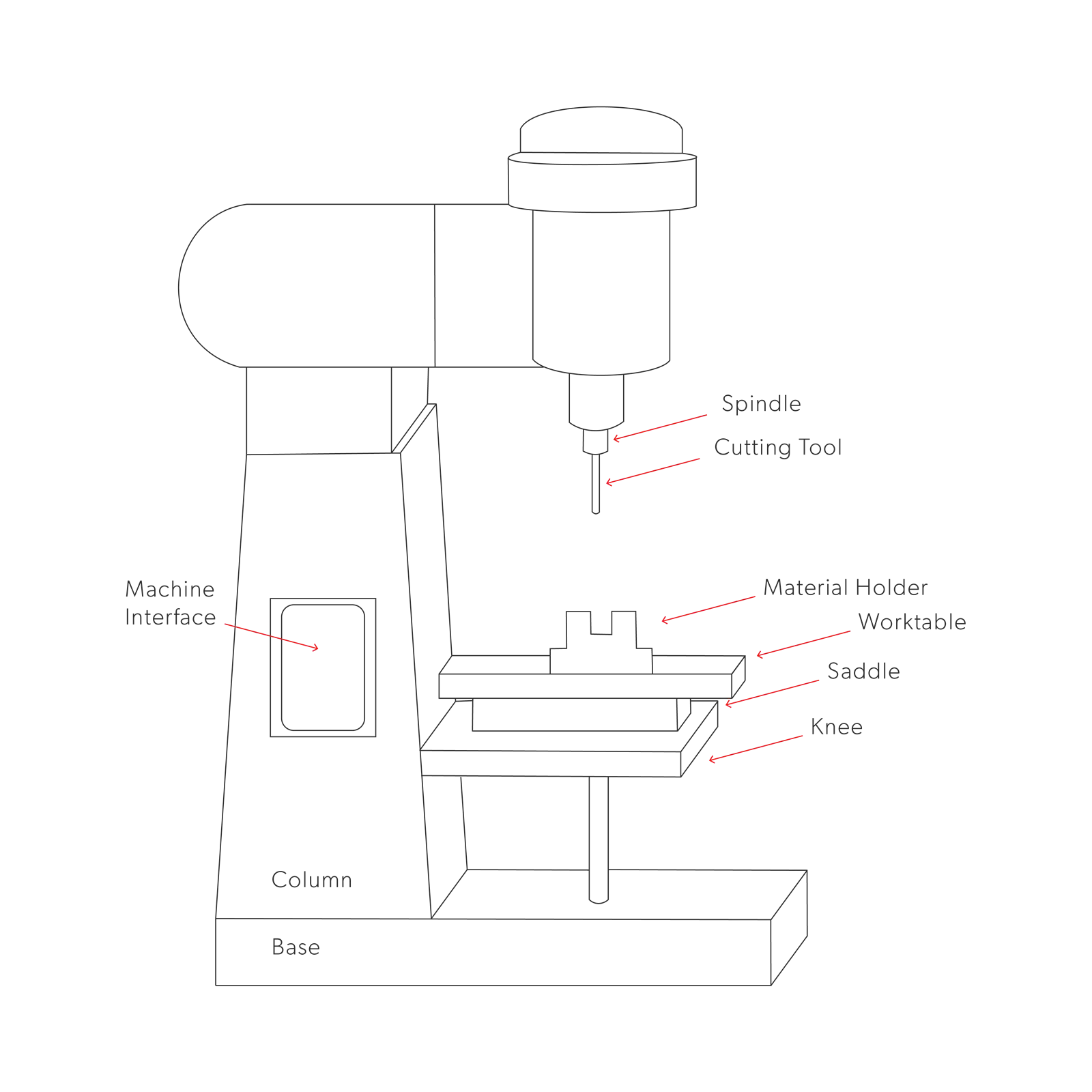
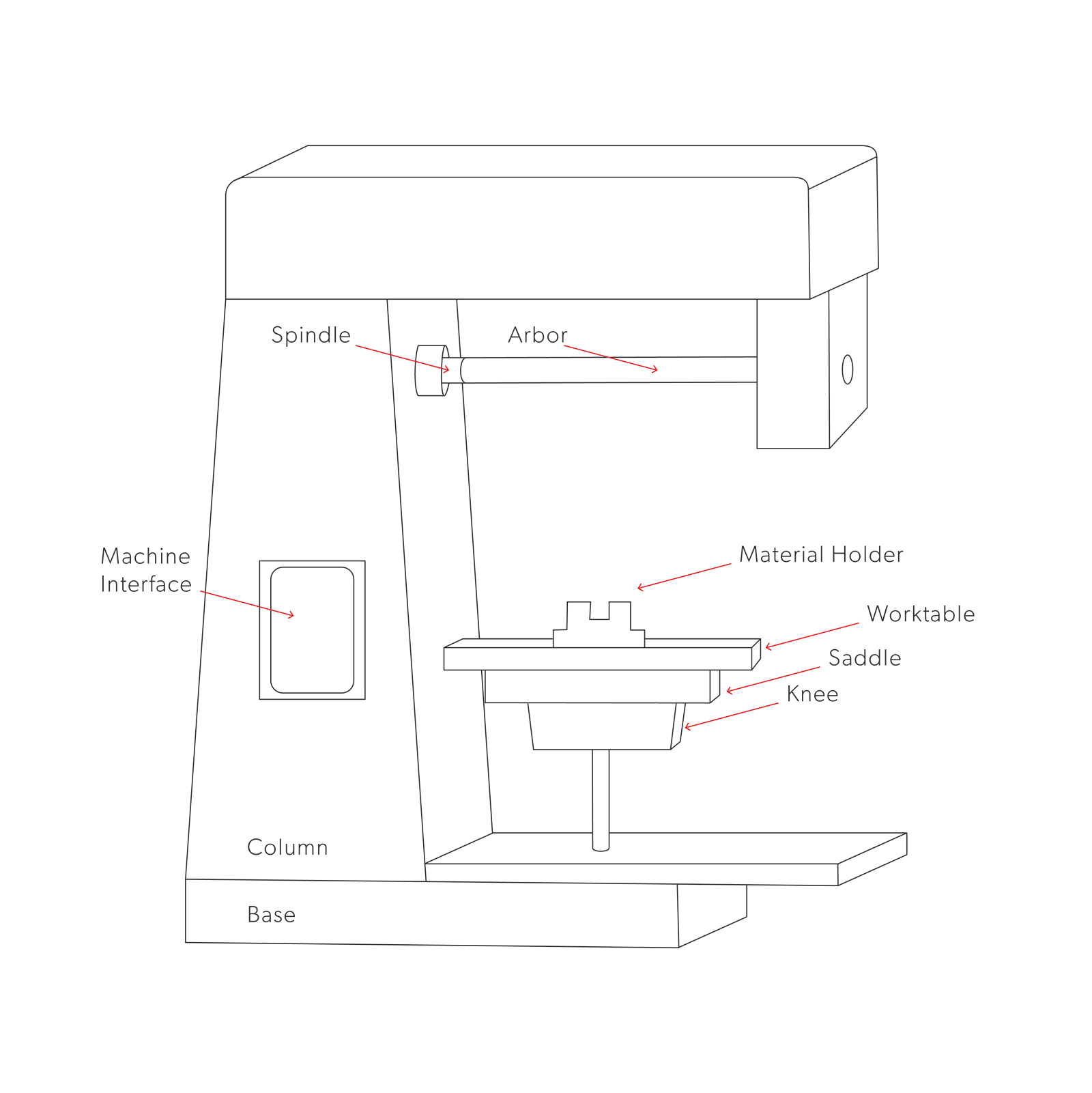
CNC milling equipment comprises several fundamental elements essential for optimal performance. The spindle assembly in CNC milling systems houses and drives the cutting implement; the worktable platform secures the raw material during CNC milling operations; multi-axis drive systems govern spindle and table positioning in CNC milling processes; the numerical control interface manages CNC milling operational parameters; protective enclosures ensure operator safety during CNC milling procedures. Additional CNC milling subsystems encompass automatic tool-changing mechanisms, coolant delivery networks for CNC milling operations, sensing devices, and positional feedback systems that enhance CNC milling precision.
CNC Milling Equipment Classifications
Vertical CNC Milling Machines
Vertical CNC milling systems feature cutting tools that operate in vertical rotational patterns, typically incorporating three-axis motion control for upward and downward tool movement. These vertical CNC milling configurations are ideal for specific CNC milling applications requiring precise vertical machining operations.
Horizontal CNC Milling Machines
Horizontal CNC milling equipment provides similar functionality to vertical CNC milling units but with laterally-oriented tool rotation. Both horizontal and vertical CNC milling configurations utilize identical cutting implement specifications, making CNC milling operations versatile across different orientations.
Three-Axis CNC Milling Systems
In three-axis CNC milling operations, workpieces remain stationary while cutting tools traverse three coordinate planes. This CNC milling approach is optimal for producing geometric features, apertures, and angular edges through precise three-axis CNC milling movements.
Four-Axis CNC Milling Systems
Four-axis CNC milling incorporates three-axis capabilities plus additional A-axis rotational movement, enabling lateral surface machining operations. Advanced four-axis CNC milling systems provide enhanced flexibility for complex CNC milling applications.
Five-Axis CNC Milling Systems
Five-axis CNC milling combines four-axis functionality with B-axis rotation, facilitating complex component manufacturing for diverse industrial applications. These sophisticated five-axis CNC milling machines represent the pinnacle of CNC milling technology advancement.
Nine-Axis CNC Milling Mill-Turn Systems
Nine-axis CNC milling systems integrate five-axis capabilities with angular CNC milling and balanced turning operations, utilizing B-axis motion and specialized tooling for intricate component fabrication through advanced CNC milling processes.